

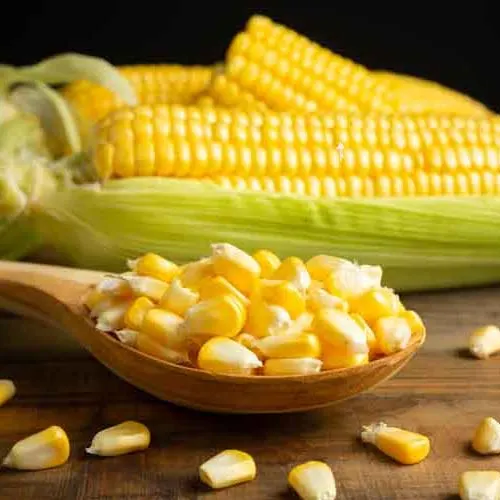
Product Details
- Product Name : Maize (Animal Feed)
- Botanical Name :Zea mays
- Type : Yellow Maize (Corn)
- Grade : Animal Feed Grade
- Origin : India
- Description :Maize is a staple cereal grain widely used as a primary ingredient in animal feed due to its high energy content, digestibility, and palatability. It is suitable for poultry, livestock, aquaculture, and other animal feed applications
Application
- Poultry Feed : Provides high energy for improved egg production and broiler growth.
- Livestock Feed : Aids in weight gain and milk production for cattle and sheep.
- Aquaculture Feed : Used as a carbohydrate source in fish and shrimp diets.
- Pet Food : Adds palatability and energy content to pet feed formulations
Packing and Shipping Details
- Packing :
- Food-grade polypropylene (PP) woven sacks or bulk packaging.
- Common sizes: 25kg, 50kg, or bulk in 1-ton jumbo bags.
- Container Loading Capacity :
- 20 FT Container : Up to 19–20 MT
- 40 FT Container : Up to 25–27 MT
- Shelf Life : 12 months under proper storage conditions.
- Storage : Store in a cool, dry, and ventilated place, away from pests and moisture.
| Nutrient | Content |
|---|---|
| Energy | 350 kcal |
| Protein | 8g |
| Carbohydrates | 72g |
| Fat | 3.5g |
| Fiber | 2g |
| Calcium | 5mg |
| Iron | 0.5mg |